
Light Peels for Eye Area Lines
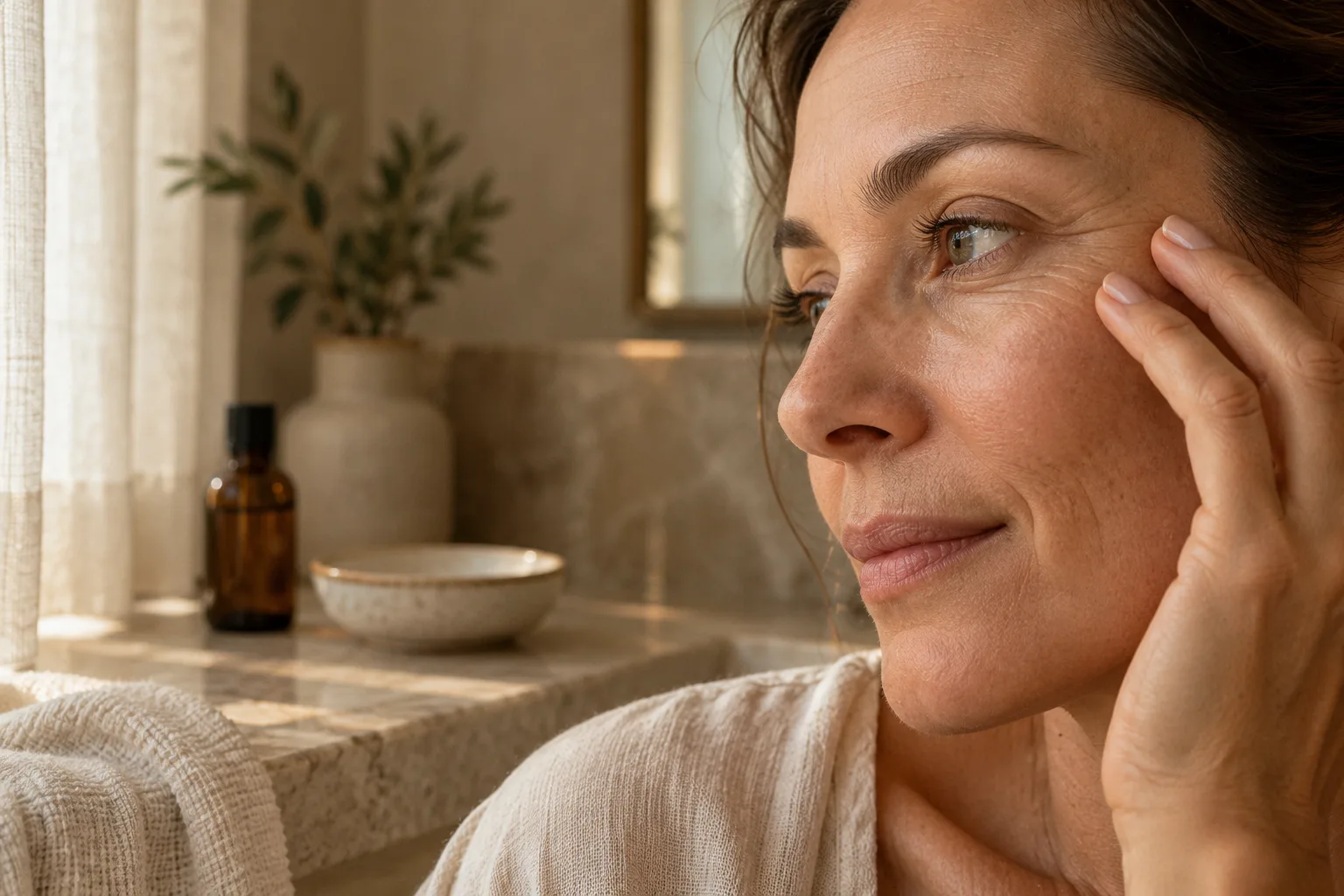
A light peel is the gentlest chemical peel, and it is often discussed for the fine lines around the eyes. The useful question is not whether it can be done but what a well-done light peel looks like at each stage, from the first hour to the last visit.
The stages start with what the peel does to the skin and move through the first week, the schedule for repeat visits, what to avoid afterward, who should perform the peel and how long the results last. Where the published guidance disagrees, the gap is worth raising with the provider.
What a light peel actually does
The American Society for Dermatologic Surgery describes a chemical peel as a technique in which a chemical solution is applied to the skin, causing it to exfoliate and eventually peel off, so that the new, regenerated skin is usually smoother and less wrinkled than the old skin. For the eye area specifically, the American Society for Dermatologic Surgery says chemical peels improve the appearance of crow's feet by using a chemical solution to remove the outer layer of old skin, and the new skin that replaces it is usually smoother and less wrinkled in appearance.
Depth is what separates a light peel from a stronger one. The American Society for Dermatologic Surgery says a superficial or lunchtime peel uses alpha-hydroxy acid or another mild acid to penetrate only the outer layer of skin to gently exfoliate it, and that the treatment is used to improve the appearance of mild skin discoloration and rough skin as well as to refresh the face, neck, chest or hands.
A reader should hold on to the word superficial. A peel sold as light should be described as one that reaches only the outer layer, and a provider should be able to name the acid used. A clinical overview of crow's feet, treatment and prevention is a useful companion read.
A realistic picture of the first week
According to the American Society for Dermatologic Surgery, patients then experience a reaction similar to sunburn in the treatment area, with redness followed by scaling within three to seven days.
The American Academy of Dermatology describes the refreshing or lunchtime peel in similar terms: healing time of 1 to 7 days, with red skin that may scale for 3 to 7 days afterward, and lotion or cream applied until the skin heals, followed by daily use of sunscreen. The American Society for Dermatologic Surgery agrees that superficial peels require one to seven days to heal and that treated skin will initially be red and may scale.
The two sources differ on makeup. The American Academy of Dermatology says makeup can usually be worn immediately after the peel but sometimes not until the next day, while the American Society for Dermatologic Surgery says makeup can usually be worn the next day. That is a good question for the provider: when, in your case, and with which products.
Repeat visits and the number of peels
The American Academy of Dermatology says no follow-up visit is needed after a refreshing peel, although 3 to 5 peels may be necessary to give you the desired results, and these peels may be repeated every 2 to 5 weeks.
The American Society for Dermatologic Surgery gives a slightly different range, saying light peels may be repeated in one- to four-week intervals, while medium-depth peels may be repeated every six to 12 months.
For a checklist, that gives two items. A single peel may not be the whole plan, so the number of visits should be part of the first conversation. And the interval should be explained, not assumed, since the published ranges overlap but are not identical.
Sun and smoking: the two things to avoid
The American Society for Dermatologic Surgery states that sun exposure and smoking after a chemical peel must be avoided because they can cause unwanted side effects, including infection and scarring. It also notes that the new skin is temporarily more sensitive to the sun.
Aftercare instructions should therefore name both. A provider who gives sunscreen advice but never mentions smoking has left out half of the published warning. A dermatologic surgery society page on crow's feet describes the lines themselves for readers weighing a peel against other options.
Who should be doing the peel
The American Academy of Dermatology states that the results you see after getting a chemical peel depend largely on the skill of the person performing the peel, and that to protect your health and get the results you seek, you should see a dermatologist or dermatologic surgeon, who have in-depth knowledge of the skin.
That puts the provider's credentials on the checklist next to the product. Ask who will perform the peel, what their training is and whether they will be the person at the follow-up if one is scheduled. These are checkable answers, and a provider who is comfortable with the question will answer it plainly. Ask for the same details from every practice you compare, so the answers can be set side by side.
How long the results last
The American Academy of Dermatology says most results are not permanent because skin continues to age, and that anyone with lots of sun-damaged skin or precancerous skin growths will likely continue to see new spots and growths on the skin.
A light peel, then, is a maintenance conversation as much as a one-time event. The honest standard is a provider who says so up front and does not describe the result as fixed.
Signs of a well-run light peel
A well-done light peel leaves smoother skin after a short, predictable healing period of redness and scaling, with clear instructions on lotion, sunscreen, makeup, sun and smoking. Before booking, ask about the depth of the peel, the acid used, the number of visits and the interval between them, the makeup timing and who performs the peel.
If any of those answers is vague, keep asking. A peel with a clear plan is easy to judge afterward, and one without a plan is not.